Customer success
Customer health you can explain
Customers rarely churn suddenly. A health score should show you the signals early, and tell you why.
2 min read
Customers rarely churn suddenly. They tell you long before the renewal call — through escalations, missed dates, and tickets that sat too long.
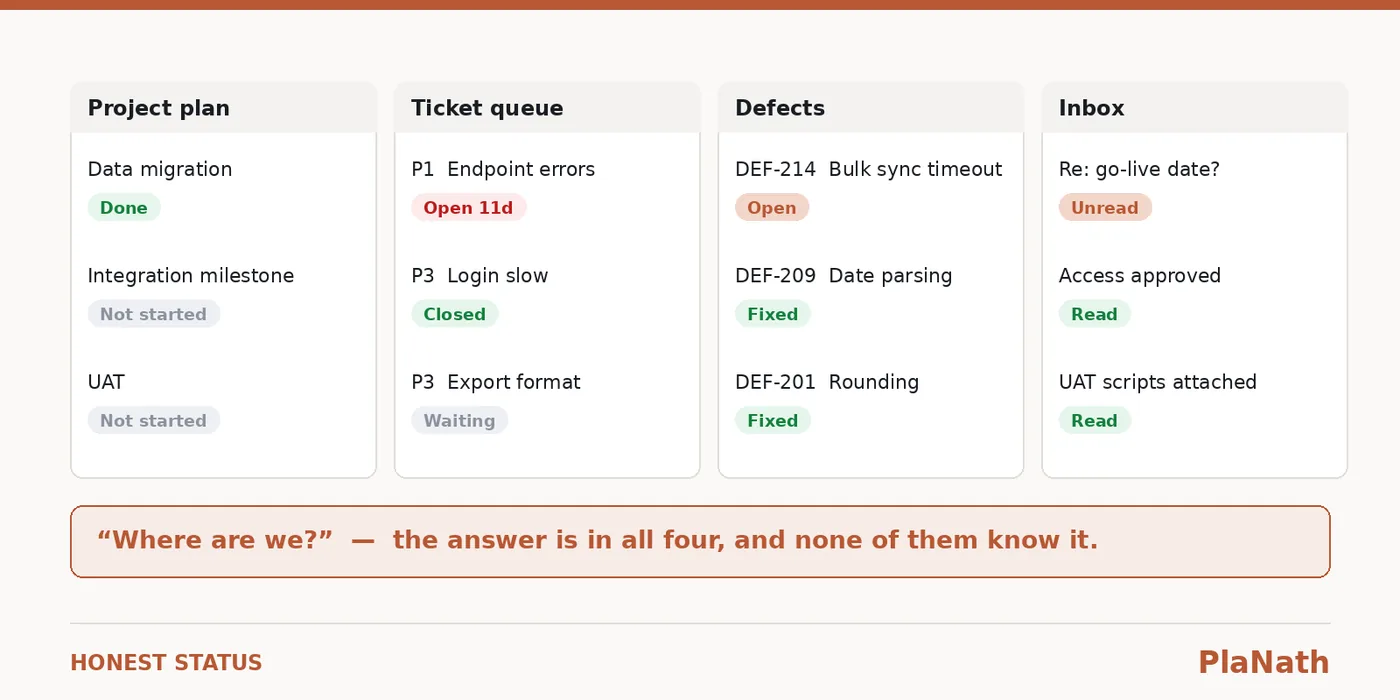
The trouble is that those signals live in different tools. Delivery is in one, support in another, and someone in customer success stitches them together in a spreadsheet the week before renewal.
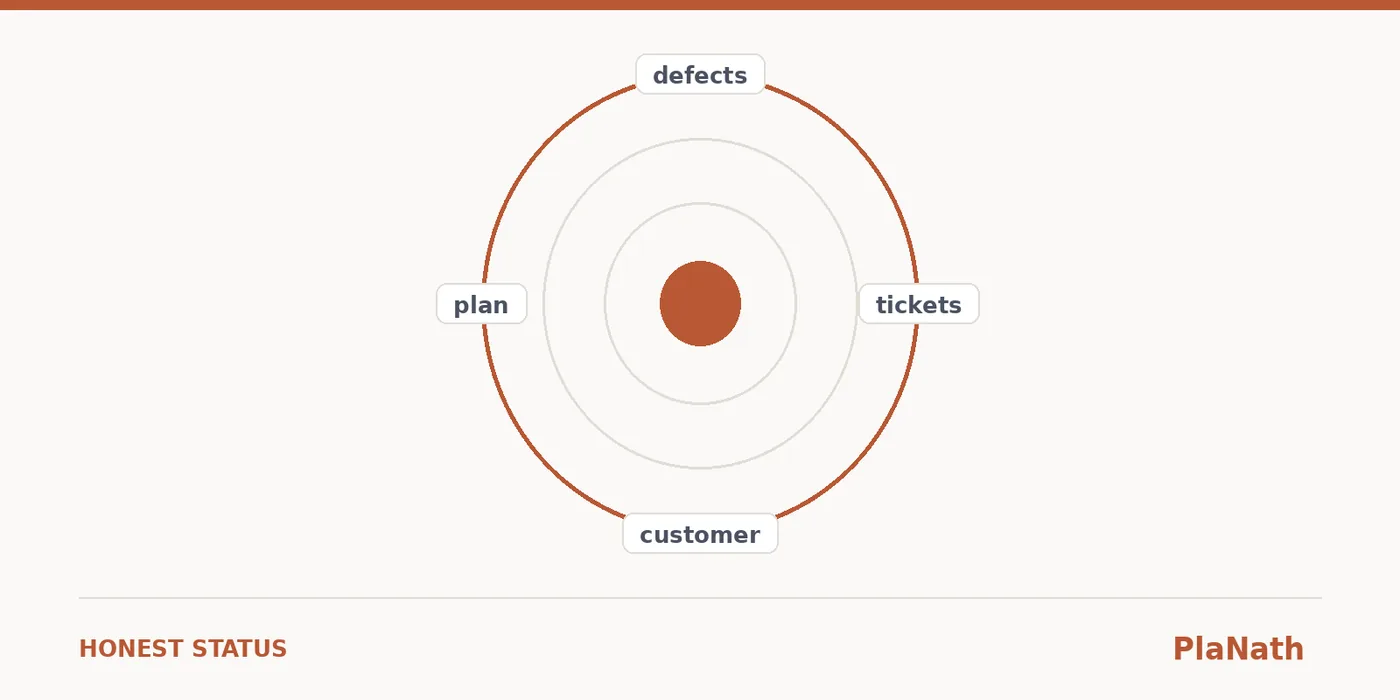
We built PlaNath so they live in one place. Delivery, defects, support and customer success are one product, so a customer's health is based on what actually happened, not what someone remembered to update.
How it works
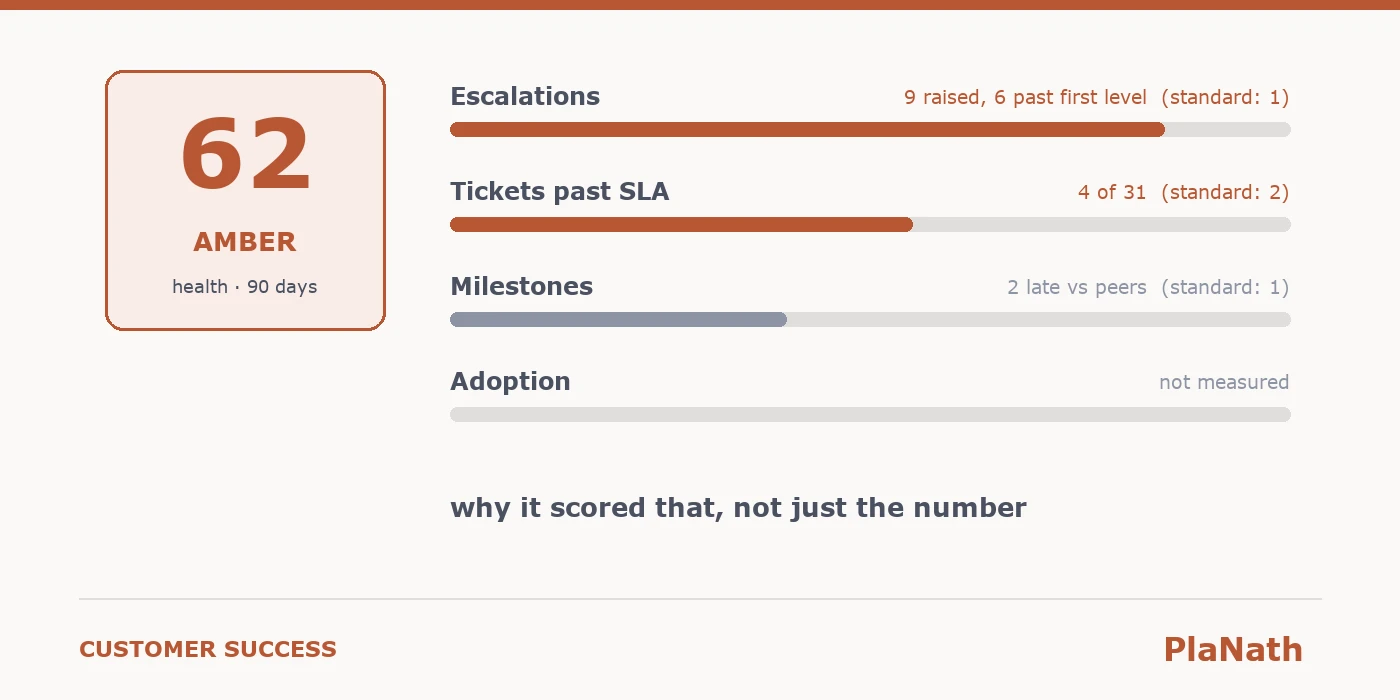
- One score per customer. Every customer gets one health score for a specific timeframe, across all of their projects.
- Built from what PlaNath already records. The signals come from the customer's whole journey, from the day they sign the SOW through delivery and support.
- Judged against the customer's segment. Each signal is measured against a standard for that segment. An enterprise account is held to a different bar than a small business.
- It tells you why. This is the part I care about most. "Escalations: 9 raised, 6 past the first level (standard: 1)" tells your team where to look this week. A number alone doesn't.
Choices we made deliberately
- No AI in the score. It is arithmetic over your own records, so it gives the same answer twice, and every point traces back to something real.
- "Not measured" is an honest answer, not a zero. If there is no data for a signal, it is left out, never guessed.
- Your CSM knows things the data doesn't. They can override the colour, but they must say why, and the calculated one stays a click away. Every change records who made it, when, and what it was before.
- A renewal date doesn't make a customer less healthy; it makes poor health more urgent. The portfolio is ordered by who needs a call first, not simply by the lowest score.
- Projects are compared with genuinely comparable ones — same segment, similar size and length — so "behind" means behind peers, not behind an ideal.
- AI can suggest better weights from your own churn history. The data it sees is anonymised, and nothing changes until an admin accepts.
Customers aren't left outside
Customers raise and follow their tickets in their own portal, and can escalate from there. When a project goes live, its handover to support carries the health summary with it.
The score is a prompt to act, not a verdict.
If you run delivery and customer success for B2B customers and would like to see this on your own data, sign up for free.
Start free